Stories are better shared.
“I’ve never started writing a poem knowing its end, the fullfillment lies in discovering it.”
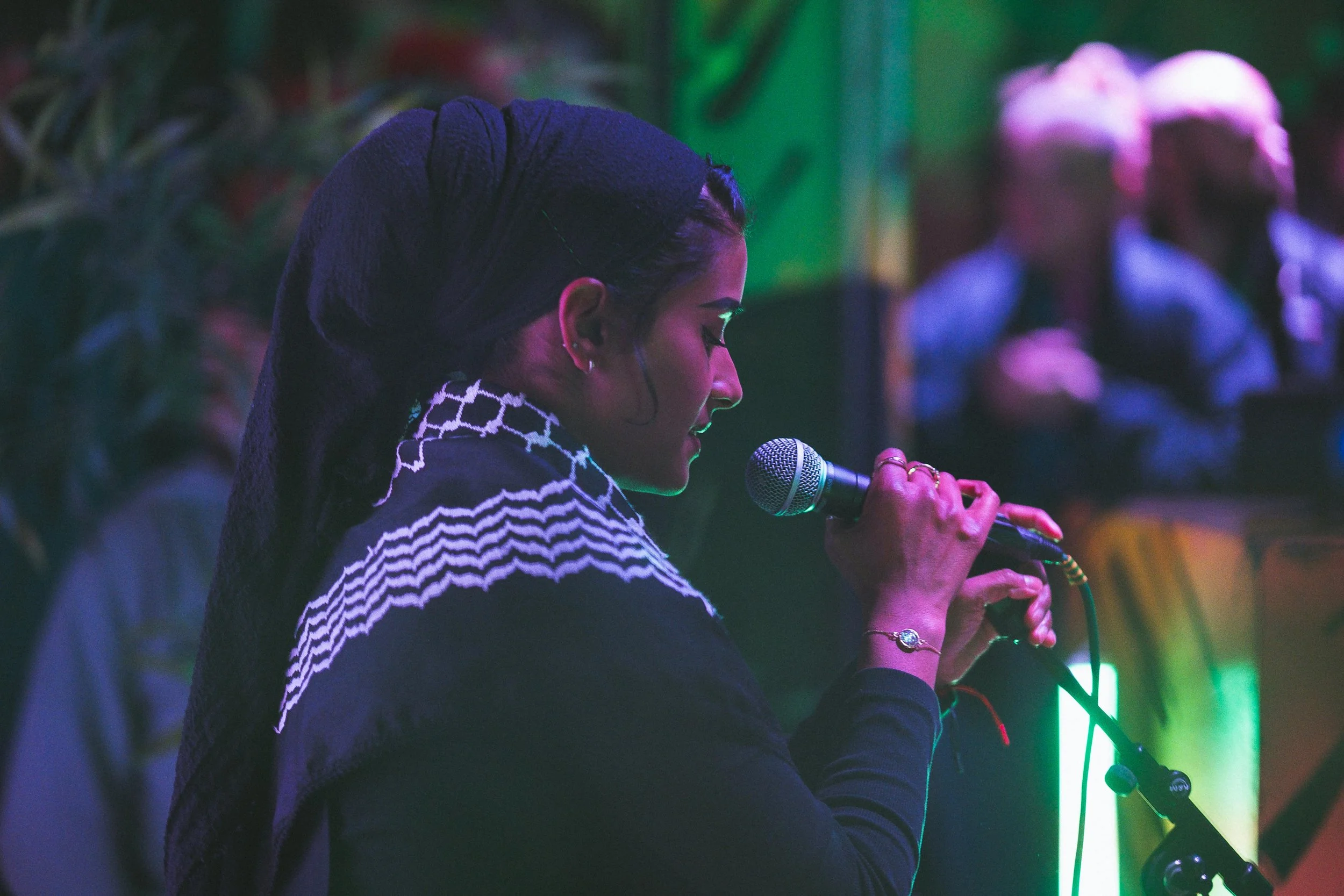
Tahmina Ali is a British-Bangladeshi spoken word poet, creative facilitator, and producer whose work sits at the intersection of storytelling, resistance, and social change. Born in Bangladesh and raised in the North East after moving to England with her family in the early nineties, her voice is shaped by dual heritage, working-class northern roots, and the lived realities of navigating identity, diaspora, motherhood, grief, and belonging.
Tahmina has written poetry for as long as she can remember but discovered the spoken word form in her early twenties after co-producing and hosting a small poetry night with her sister at their local community centre. At the time, they struggled to find performers within the region and had to search further-a-field to build connections. That experience sparked a turning point: I can do this too — and I want to do it here. What began as a small community event became the foundation for a body of work rooted in creating space, amplifying unheard voices, and building cultural visibility in the North East.
Since then, Tahmina has performed at festivals, theatres, and events across the UK, presented her own radio show, curated creative spaces, delivered workshop programmes, won multiple awards, founded spoken word night Freespill, co-edited Thresholds: Poems by South Asian Women in North East England, and published her debut poetry collection SPOKEN.
Her poetry is deeply personal yet politically resonant — drawing from lived experience to explore migration, womanhood, healing, generational memory, and survival. Blending northern cadence with South Asian rhythm, her work combines rich imagery with emotional honesty to create poetry that is intimate, confronting, and unapologetically human. Through storytelling, Tahmina challenges stereotypes, questions silence, and documents experiences that are too often overlooked or erased.
For Tahmina, poetry is more than performance; it is a form of resistance, a way of reclaiming voice, preserving truth, and making space for difficult conversations. Writing carried her through some of the darkest periods of her life, including grief, PTSD, and postnatal depression. Poetry became both lifeline and release — a place to untangle pain, process memory, and reconnect with herself beyond expectation and survival.
Alongside her performance work, Tahmina delivers creative writing workshops centred around storytelling, healing, confidence, and self-expression. Whether working with communities, young people, women, or emerging creatives, her practice is rooted in the belief that stories have the power to connect, transform, and create lasting change.
Press Materials
For pictures and biographies, please click here.